Saúde
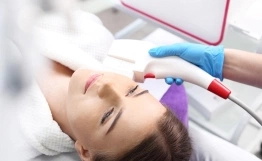
Immersion in Fractional CO2 Laser
CURSO
In-person
Target Audience
Undergraduates in aesthetic biomedicine, dentistry, medicine, and aesthetic pharmacy.
Undergraduates from the 6th semester of biomedicine, dentistry, and medicine.
Students in advanced aesthetics specialization.
Course offering justification - The fractional CO₂ laser is one of the most established and sought-after technologies in skin rejuvenation, addressing photoaging, wrinkles, mild laxity, acne scars, dyschromias, and texture and pore refinement. As it is an ablative procedure, it requires the professional to have a rigorous technical mastery of parameters, an understanding of the laser-tissue interaction, and careful management of the risk of post-inflammatory hyperpigmentation (PIH), especially in higher phototypes. The aim of this course is to train aesthetic health professionals to operate safely, based on scientific foundations and predictable results, while respecting biosafety and the individuality of each phototype.
General Objective
To train professionals to perform resurfacing and rejuvenation procedures with fractional CO₂ laser safely, based on scientific principles, while respecting biosafety standards and managing pigment risk, aiming for harmonious and predictable aesthetic results.
Specific Objectives
- To present the fundamentals of laser physics and laser-tissue interaction (water chromophore, ablation, and coagulation).
- To understand fractional technology and the concept of treatment zones (DOT/microcolumns).
- To teach the reading and adjustment of parameters: power, pulse duration, energy, DOT (spacing), repetitions, interval, and delay time.
- To master pre-procedure evaluation, patient selection, and screening.
- To understand skin preparation and the depigmenting protocol before and after the procedure.
- To prevent and manage complications, paying attention to the risk window for PIH (weeks 3 to 8).
- To understand the appropriate topical anesthesia modalities for the procedure.
- To develop communication skills for a humanized service and alignment of expectations.
Graduate Profile
Graduates will be able to work in aesthetic clinics, private practices, facial harmonization and rejuvenation centers, provided they comply with the regulations of their professional category and hold registration with the regional council, allowing them to practice without supervision.
Curriculum Content
[dropdown-title]Introduction to CO₂ laser and fractional technology.[/dropdown-title]
[dropdown-title]Laser physics and laser-tissue interaction: ablation, coagulation, and the water chromophore.[/dropdown-title]
[dropdown-title]Skin analysis and Fitzpatrick classification.[/dropdown-title]
[dropdown-title]Indications and contraindications (photoaging, acne scars, dyschromias, texture, and pores).[/dropdown-title]
[dropdown-title]Equipment parameters: power, pulse duration, energy, DOT, repetitions, interval, and delay time.[/dropdown-title]
[dropdown-title]Application modes: superficial (shallow), deep (deep), mixed (mix), and glow.[/dropdown-title]
[dropdown-title]Protocols by indication and by phototype.[/dropdown-title]
[dropdown-title]Topical anesthesia and occlusion techniques.[/dropdown-title]
[dropdown-title]Biosafety, asepsis, and ocular safety (use of shield).[/dropdown-title]
[dropdown-title]Pre-procedure skin preparation and depigmenting protocol.[/dropdown-title]
[dropdown-title]Management of complications: prolonged erythema, PIH, infection, and herpes reactivation.[/dropdown-title]
[dropdown-title]Post-procedure care and photoprotection.[/dropdown-title]
[dropdown-title]Ethics and legislation.[/dropdown-title]
[dropdown-title]Supervised practice in a real model.[/dropdown-title]

Ministrante
Joice Regina Marcilio Gabriel
Bachelor's degree in Biomedicine from the University of Southern Santa Catarina (UNESC), with a specialization in Clinical Analysis (2019). Master's degree in Health Sciences from the Experimental Neurology Laboratory at UNESC, with an emphasis on Neuroscience, under the supervision of Prof. Dr. Josiane Budni, working on projects related to animal behavior and experimental models of Alzheimer's type dementia. Technician in Chemistry from SATC (2014). Postgraduate in Advanced Aesthetics (2022), with training and experience in injectable procedures. Has experience in teaching and conducting free courses focused on injectable aesthetics. Interested in the fields of neuroscience, aesthetic biomedicine, teaching, and scientific research, maintaining constant academic and professional updates.
Acesse o Lattes do ministranteDuração:
12 hours
4 installments of R$ 370.00
* 10% discount for alumni or current students and 15% for upfront payments (not cumulative).