Unesc and Orleans assess the first year of Integratur Amrec and advance in the structuring of tourist itineraries
Unesc and the municipality of Orleans are making progress in organizing local tourism and regional integration through Integratur Amrec, a program developed by the University with investment from the 12 municipalities...

Publicado por: Daniela Savi
em 15 de outubro de 2026
Tempo de leitura: 9 minutos.

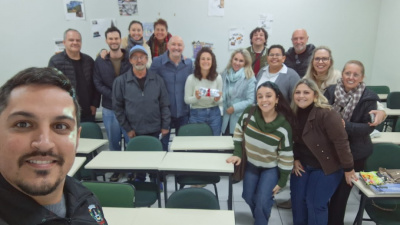
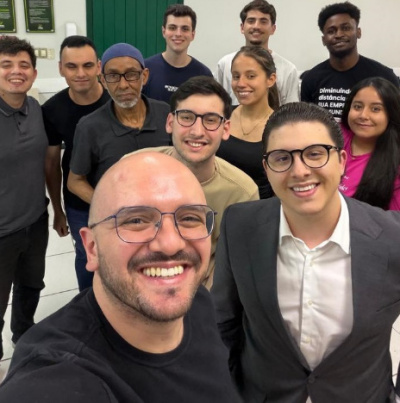
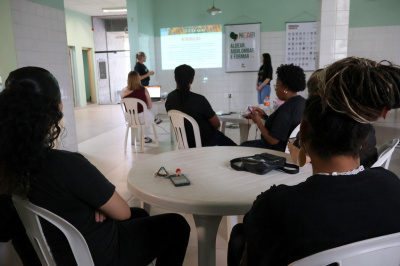
Unesc and the municipality of Orleans are making progress in organizing local tourism and regional integration through Integratur Amrec, a program developed by the University with investment from the 12 municipalities of the Carboniferous Region Municipalities Association (Amrec). Last Wednesday (10/14), the acting rector of Unesc, Gisele Silveira Coelho Lopes, visited the city with the program's technical team to evaluate the actions of the first year, present the results achieved, and define the next steps.
 The meeting was also marked by the presentation of data from a preliminary survey on the profile and behavior of visitors to the region, conducted by Integratur Amrec in partnership with the Socioeconomic Development Observatory of Unesc in the first four months of 2026. The information helps to understand the motivations for travel, accommodation preferences, and the length of stay of tourists, providing support for planning itineraries, experiences, and services aligned with the interests of the public.
“We are experiencing something unprecedented in our region, as tourism has never been thought of in an integrated way. This allows tourists to have a regional presence and to experience the offerings of different municipalities. This research is still a snapshot, but it already indicates possibilities. When we have organized products, we can contribute to the entire network,” emphasized Gisele.
The acting rector also highlighted the University’s contribution to support municipal administrations with technical and professional knowledge. According to her, structuring tourism requires continuity, planning, and joint work between the public sector, the University, and entrepreneurs.
“Our role is to provide support and work in partnership. Building a tourism-oriented culture doesn’t happen overnight, but we are making professionals available to build this path together. With the project, each municipality can better recognize its potential and realize that it doesn’t need to go far to find good experiences and opportunities. We have many treasures here, right next door,” she stated.
The mayor of Orleans, Fernando Cruzetta, emphasized the importance of the work developed by Integratur Amrec and the partnership with Unesc to organize the sector in the municipality. He noted that the municipal team monitors the actions and evaluates, together with the program's professionals, the necessary steps to continue the planning. 
“We want people to come to our municipality and find reasons to get to know Orleans, stay here, and experience our offerings. Being integrated into this regional itinerary is an important step to showcase what we have to offer and spark visitors' interest in getting to know our city,” he commented.
For the president of Amrec, Vagner Espíndola, Integratur Amrec is a strategic initiative for the development of tourism throughout our region. “The union between municipalities, Unesc, and the professionals involved allows us to advance with planning, technical knowledge, and a regional vision, identifying potentialities and transforming them into concrete opportunities. This integrated work is essential to structure itineraries, strengthen entrepreneurs, and enhance the riches of each city. More than developing tourism, Integratur Amrec contributes to boosting the economy, generating jobs and income, and positioning the carboniferous region as an increasingly attractive destination,” said Espíndola.
Survey reveals visitor preferences
Among the data presented, 81.8% of respondents indicated vacation, leisure, and recreation as their motivation for traveling. Regarding accommodation, 54.55% stay in inns or cabins, while 21.21% stay at friends' houses and 6.06% rent properties for the season.
 The survey also identified that 91.67% of respondents stay for one to four nights in the visited municipality. The results point to possibilities for creating experiences that combine accommodation, gastronomy, culture, nature, and leisure, contributing to expanding the options available to visitors and encouraging longer stays at destinations.
Conducted between January and April, the survey corresponds to the first phase of the quadrimestral tourist demand assessment. Throughout the year, the consolidation of data will allow for identifying the profile of tourists, their interests, and preferences. This information can support public managers and entrepreneurs in identifying opportunities, enhancing the tourism offer, and planning products and experiences more aligned with the public's expectations.
Orleans advances in structuring attractions
In the municipality, Integratur Amrec has already completed the first phase, dedicated to qualifying Orleans. Among the deliverables are the cataloging of tourism offerings, the issuance of technical opinions, and the preparation of a situational report that gathers information about local conditions and potentialities.
In the Integrated Tourism phase, the project is advancing in testing experiences and preparing technical documentation. The city tour has already been conducted, with the testing of the overnight tourist itinerary still pending.
The tourist signage of five priority attractions is also part of the planned actions for the municipality, as well as the development of an executive and functional project in partnership with Iparque, with delivery expected in the first half of 2027.
From contact with entrepreneurs and sector representatives, opportunities have been identified to develop cultural and leisure itineraries, as well as experiences focused on nature and rural tourism.
Integration expands opportunities for the region
The coordinator of Integratur, Paulo Priante, emphasized that municipalities are recognizing tourism as a strategic activity for the coming years. For him, the integration among cities allows for organizing local initiatives within a regional proposal, expanding development opportunities.
"The municipalities understood that tourism is an important vector that needs to be developed in the next five to ten years. This program unites the 12 municipalities in the region and seeks, through integration, to place this construction on a platform, contributing to the development of the entire region," he stated.
The technical leader of the project, Tayse Nicoladelli, explained that the methodology includes visits to the enterprises and services that make up the tourism offering, from accommodations to guiding services. The work also considers the necessary support network for the sector's operation.
"When we apply this methodology, we go through each facility or service that can make up a tourism product. This ranges from accommodation to guiding. The methodology also considers that the support infrastructure is very important," she pointed out.
The Secretary of Culture and Tourism of Orleans, Gustavo de Mello Souza, highlighted that organizing itineraries can help boost the local economy. According to him, the activity depends on continuous planning and coordination among the different stakeholders involved.
"It's a gradual process. Tourism is economy, and tourists make this economy thrive. The activity already exists, but it needs to be structured and organized," he stated.
Platform connects destinations and experiences
Integratur aims to integrate the 12 municipalities of Amrec into a regional strategy for enhancing natural and cultural attractions, enterprises, and local identities. The initiative combines the technical knowledge of the University with the participation of municipal administrations and representatives from the tourism sector.
Through the program's platform, residents and visitors can discover destinations, attractions, restaurants, hotels, inns, events, and experiences available in the region, as well as organize personalized itineraries according to their interests. Orleans is already part of the initiative, and the next steps should enhance the organization of attractions and the possibilities for connecting local enterprises.
In thanking the technical team and municipal partners, Gisele emphasized the importance of transforming the work developed into results for the region.
"We have a commitment to Amrec and want to ensure that all this work materializes. Each municipality has its characteristics and conditions for developing tourism. With the support of the University, we can accelerate this process and build a sustainable legacy," she concluded.
The program has a three-year cycle, during which the teams continue to work with the municipalities to monitor deliveries, identify new possibilities, and enhance conditions for the integrated development of regional tourism.
Tags: