Unesc opens the doors of laboratories and brings students from Criciúma closer to water preservation
Just a few minutes inside a university laboratory are enough for instruments, reagents, and equipment to transform from mere abstract concepts in textbooks into windows to...

Publicado por: Décio Batista
em 22 de outubro de 2026
Tempo de leitura: 5 minutos.

 Just a few minutes inside a university laboratory are enough for instruments, reagents, and equipment to transform from mere abstract concepts in textbooks into windows to the real world. When it comes to water, a vital resource that supplies our taps, rivers, and ecosystems, chemistry and microbiology take on an even more urgent significance.
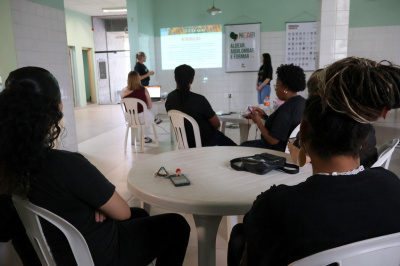
It was with this proposal for integration and awareness that Unesc opened its doors on the evening of Tuesday (10/20) to welcome the school community for a transformative experience.
 This initiative is part of the curricularization project of the Extension of the Environmental and Sanitary Engineering course at Unesc, a methodology that integrates academic practice with social commitment. In the second phase of the course, the project connects the learning of three fundamental subjects: Environmental Chemistry, Microbiology and Environmental Health, and Applied Environmental Ecology.
One of the most notable aspects of this journey is the Environmental Education project. In practice, the University hosts high school classes on its premises or takes the structure to schools, promoting direct monitoring of water quality analyses, discussions on the preservation of water resources and aquatic environments.
From the classroom to the laboratory
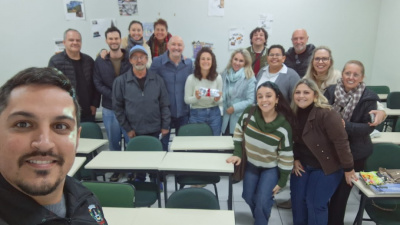
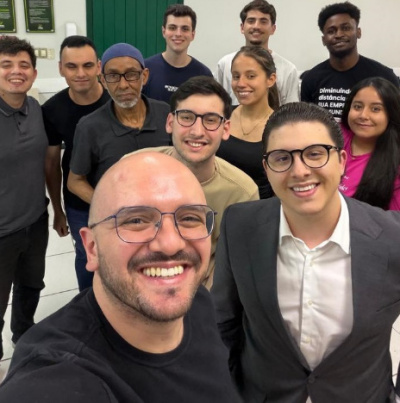
 During the activities, 22 students from the final year of Humberto de Campos Basic Education School closely experienced the scientific routine. First, in the Chemistry laboratory, they observed physicochemical tests measuring pH, chlorine levels, dissolved oxygen, color, turbidity, and hardness (calcium and magnesium content) of the water. Then, in the Microbiology laboratory, they observed the investigation of total and fecal coliforms.
In addition to the practical experience in the laboratories, the visitors took home educational brochures produced especially by the students of the Environmental Chemistry course, gathering accessible awareness guidance.
 For the assistant coordinator and professor of the Environmental and Sanitary Engineering course at Unesc in the Environmental Chemistry discipline, Marta Valéria Guimarães de Souza Hoffman, this continuous exchange between the University and society represents the essence of academic training:
"They learn and also teach. This knowledge goes beyond the walls of the University: this is Extension, stepping out of this environment and working with communities, schools, and businesses. This involvement of the students with the community is the main objective of the curricularization of Extension," the professor emphasized.
Learning in two ways
 For those at the laboratory bench teaching, the opportunity to transmit knowledge strengthens not only technical training but also the sense of social responsibility. This is what second-phase Environmental and Sanitary Engineering student Ana Laura Pereira Uggioni reports:
"The curricularization of Extension is important for us to take the knowledge we learn outside the classroom and teach it to others who may never have the opportunity to learn these contents. It is a way to share what we learned from the professors at Unesc and contribute to the development of the community. I think it is very important to learn about water and its preservation and also to be able to teach others about it," she evaluated.
The bridge between school and University
 The opportunity to experience university infrastructure represents a significant leap in the pedagogical process of basic education. Biologist, alumnus, and doctoral student at Unesc, and Biology teacher at Humberto de Campos School, Marcelo Zapelini Rosa, reinforces the pedagogical value of the encounter:
"We brought the students to have this experience and get to know the University. We are in the Chemistry laboratory so they can see content from Chemistry, Physics, and Biology. We study these subjects at school, but there we do not have a laboratory as well-equipped as Unesc's. Therefore, it is important to bring students to experience these areas in practice," he explained.
Looking to the future
 In the eyes of the young third-year students, the visit to the campus takes on the contours of personal discovery and citizenship. Direct contact with laboratory analyses demystifies science and brings youth closer to everyday environmental decisions.
For student Heitor Bispo, the activity offered a new perspective on preservation and environmental management. "I believe it is very important to have this experience of coming to the University and having direct contact with practice. We can see what it is like to study and how analyses are conducted, such as measuring the pH of water and assessing its suitability for bathing. We also understand the role of public agencies, something that was explained during this very important activity that Unesc has been carrying out for students," he commented.


Tags: