Energy Transition and Climate Change is the theme of the 13th Academic Week of Environmental and Sanitary Engineering at Unesc
At a time when the impacts of climate have shifted from distant predictions to part of our daily reality, with phenomena like El Niño consistently making headlines, the environment ...

Publicado por: Décio Batista
em 29 de setembro de 2026
Tempo de leitura: 7 minutos.

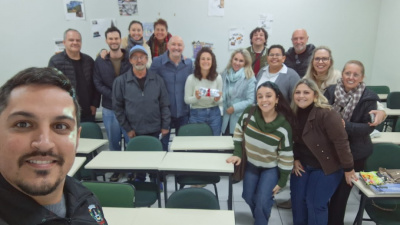
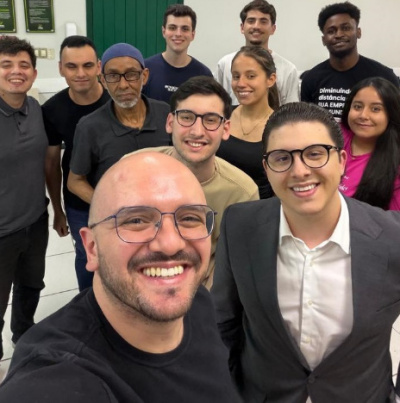
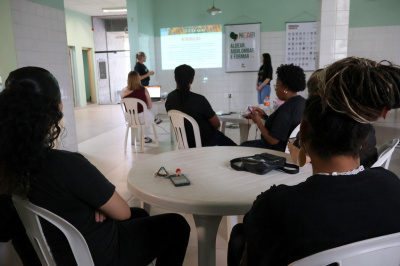
 At a time when the impacts of climate change have shifted from distant predictions to part of our daily reality, with phenomena like El Niño constantly making headlines, the university environment transforms anxiety into action. At Unesc, students, professors, and specialists gathered on the evening of this Monday (September 28) to discuss one of the most decisive topics of our era: the energy transition and climate change.
The revival of the Academic Week of the Gaya Academic Center of Environmental and Sanitary Engineering (Cageas) represents the reconnection of theory with practice and the leadership of young people who have decided to shape their own professional future.
The student dream that became a reality
 For those in college, witnessing an event of this magnitude take shape is the realization of a collective effort. The president of the Gaya Academic Center, Giulia de Bona Sartor, enthusiastically expresses the significance of this moment for the students.
"Since I took over the presidency of the Academic Center, reviving the Academic Week for the course has been a dream we discussed among the management. We are very happy to have organized everything," Giulia reveals.
The motivation for choosing the central theme came from the classrooms themselves and the global urgency. "We have talked a lot in class about climate change. El Niño has been widely discussed in the media this year, and we chose this theme because of its importance in daily life and because, in the future, we will face these challenges in the job market," adds the student leader.
Institutional Support
 The opening of the meeting featured the presence of the Director of Student Affairs, Miquele Lazarin Padula, representing the acting rector, Gisele Silveira Coelho Lopes, and the vice-rectors. In her message, she emphasized the importance of exposing real problems to find concrete solutions for society.
"The demands of the energy transition are a fact. We can no longer escape it. We need to think about new matrices and sources of energy. I am a food engineer and have worked with biodiesel for a long time. My doctorate presented a new alternative for the purification of biodiesel, seeking greater yield from the reaction. The energy transition is a topic I enjoy learning about and following because I consider it very important," she emphasized.
The director made a point of recognizing the efforts of the Gaya Academic Center, the course coordination, and the support of the Central Directory of Students (DCE), highlighting the value of the time dedicated by students to provide high-quality learning experiences for their peers.
Revival
 The course coordinator, Professor Paula Tramontim Pavei, highlighted the importance of the exclusive revival of the Week, focused on the Environmental and Sanitary Engineering course.
“Having an exclusive moment for Environmental Engineering, focused on topics of our interest, is essential. The last academic weeks were held collectively with other engineering courses. The CA dedicated itself, organized, and is making it happen. The chosen theme could not be more current. We are talking about issues that go beyond environmental discussion. They involve energy, water, cities, industry, production, technology, planning, and, above all, decisions that will have a direct impact on society and future generations. We need professionals prepared to understand these challenges, work in an integrated manner, and transform knowledge into solutions,” commented Paula.
The public sector and future policies
 The training of future environmental and sanitary engineers necessarily involves understanding the public policies that govern the state. Representing the State Secretariat for the Environment and Green Economy of Santa Catarina (Semae), the Director of Climate, Energy, and Energy Transition, Mariane Murakami, emphasized the strategic role of these new professionals.
"I am here to talk about the professional qualification of environmental and sanitary engineers and their importance in this moment of climate change, adaptation, and energy transition," Mariane pointed out.
The director brought encouraging data about government actions in Santa Catarina, highlighting the Just Energy Transition Plan of Santa Catarina. "The State has a series of programs and projects aimed at climate change, urban adaptation, and support for municipalities. The state plan is already about 70% complete, almost ready to be delivered to the people of Santa Catarina. It seeks improvements in the system and the decarbonization of the state's economic activities," she explained.
Private sector: Challenges, research, and responsibility
 The energy transition requires direct involvement from the industry, especially in regions historically linked to traditional energy matrices. The environmental analyst from Diamante Energy Generation, Andresa Severino, brought to the debate the perspective of large companies and the new directions of the electricity sector.
When asked how a company that uses coal addresses sustainability and pollution, Andresa emphasized the pursuit of innovation and socio-environmental responsibility:
"The proposal is to show how the company is acting regarding the energy transition, what the new directions are, and the importance of the private and public sectors participating together in this transition. We will present the research that Diamante is conducting and the new horizons it seeks for sustainable transition," she pointed out.
Program
The Academic Week was structured to provide a complete immersion for students, combining institutional debates, technological training, and the exchange of professional experiences.
The program continues this Tuesday and Wednesday (September 29 and 30).
Check the details:
September 29 - Tuesday - 7 PM: Technology and Environmental Innovation
Main Activity: Practical course involving innovation and technology applied to environmental management.
Objective: Equip students with modern technological tools for monitoring, data analysis, and sustainable solutions in cities and industries.
Instructor: Professor Álvaro Bach and the Terraço Program team.
September 30 - Wednesday - 7 PM: Connection with the job market and success stories
Main Activity: Panel and roundtable with alumni from the Environmental and Sanitary Engineering program at Unesc.
Objective: Foster an open conversation about the challenges of the job market, career paths, professional roles after graduation, and the role of environmental and sanitary engineers in the global transition scenario.


Tags: