Unesc research enhances the management of ecological trails in the UNESCO Global Geopark
The connection between the University and the regional community has been strengthened through the training program "Technical Foundations for Managing Trails in Natural Areas," an extension and research project by ...

Publicado por: Marcela Barrozo
em 28 de setembro de 2026
Tempo de leitura: 3 minutos.

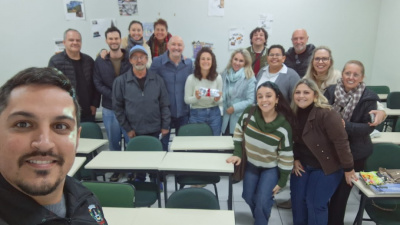
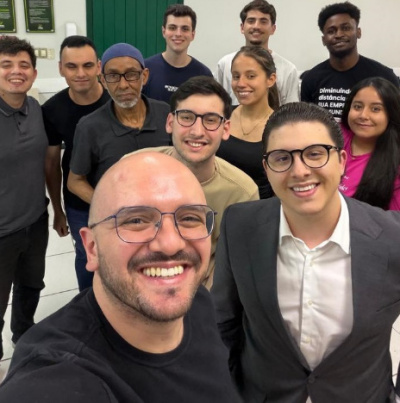
The connection between the University and the regional community was strengthened through the training "Technical Foundations for Managing Trails in Natural Areas," an extension and research project by Unesc taught by Luciano Miranda, a doctoral student in the Graduate Program in Environmental Sciences (PPGCA).
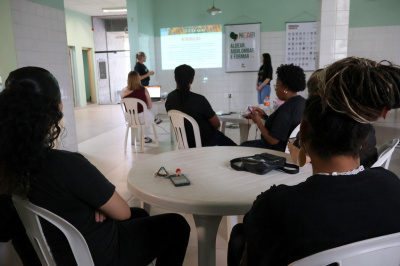
 The activity took place at the invitation of the UNESCO Global Geopark Caminhos dos Cânions do Sul (GMUCCS) to train local professionals and managers. The Institution's classes were delivered across the seven municipalities in the territory: Torres, Mampituba, and Cambará do Sul, as well as Praia Grande, Jacinto Machado, Timbé do Sul, and Morro Grande.
The workshops were based on the master's thesis titled "Tourism Carrying Capacity Applied to Access Trails to Paleotocas in the UNESCO Global Geopark Caminhos dos Cânions do Sul Associated with Visitor Safety," under the guidance of Juliano Bitencourt Campos and co-guidance of professor José Gustavo Santos da Silva.
"Scientific research needs to return to the territory and engage with those who experience the investigated issues daily. When the knowledge produced at the university is shared and discussed with the community, it gains new possibilities for application," emphasizes the advisor.
 The study's setting was the Portal do Palmiro trail in Timbé do Sul, where researchers applied international scientific methodologies and ABNT technical standards to assess safe access to the paleotocas.
The scientific data generated resulted in the international article "Segmentation and Classification of the Trail of the Site of Geological Interest 'Portal do Palmiro', Caminhos dos Cânions do Sul UNESCO Global Geopark (Brazil)," published this year in the journal Geoconservation Research. During the circuit, the team discussed these technical parameters with the regional tourism trade.
"Academic research should not remain restricted to publications. When its results return to the territory and incorporate local experiences, we create a process of collective knowledge construction, essential for sustainable development," highlights the co-advisor.
For the executive director of the UNESCO Global Geopark Caminhos dos Cânions do Sul, Gislael Floriano, this experience reinforces the importance of a university increasingly connected to the territory, where research, extension, training, and community participation are articulated.
"In Caminhos dos Cânions do Sul, initiatives like this contribute to transforming scientific knowledge into concrete practices and, at the same time, allow the experiences and demands of the community to guide new research processes," adds the director.
Check out the complete work at the link: https://oiccpress.com/gcr/article/view/20027


Tags: