Cultural heritage is a topic at the Community Leadership School of Unesc
When we think of history and cultural heritage, it's common for the mind to wander to great museums, old textbooks, or monuments protected by law. However, for the residents of Criciúma...

Publicado por: Décio Batista
em 17 de outubro de 2026
Tempo de leitura: 4 minutos.

 When we think of history and cultural heritage, it's common for the mind to wander to great museums, old textbooks, or monuments protected by law. However, for the residents of Criciúma, true history often holds its roots within a drawer of old photographs, in the memory of work on the coal mine floor, or in the stories told on the corners of each neighborhood.
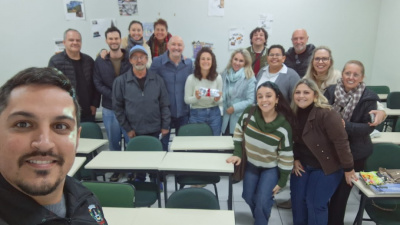
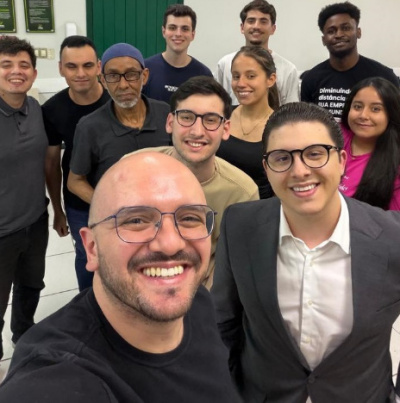
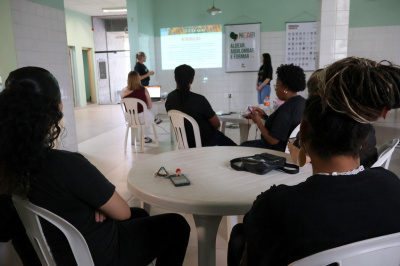
 It was with the purpose of bringing leaders closer to their own journey that the Community Leadership School of Unesc held its sixth meeting on the morning of this Saturday (10/17). Under the theme "Does cultural heritage show who we are? Memory, territory, and community," the event brought together community leaders for a deep reflection on belonging and citizenship.
A bridge between academic knowledge and community experience
 Representing the director of Extension, Culture, and Community Actions (Dirext), Sheila Martinhago Saleh, extension professor Abel Corrêa de Souza, accompanied by the Dirext secretary, Carla Casagrande Monteiro, highlighted the participatory essence of the meeting, demystifying the rigid concept that many have about the topic.
 "Often, people think that heritage is something that only concerns scholars, but that is not the proposal. We encourage students to recall a memory from their neighborhood or community to enrich the conversation and show the significance of that memory as cultural heritage of the place where the person lives. We want to awaken interest in the cultural preservation of each locality and community. Our meeting aims to work precisely on memory, territory, and the bond with the community," explained Souza.
Voices from the territory: from the mining past to the collective future
 The activity, in the format of a lecture and workshop, was led by professor Daniela Pistorello. During the dynamics, participants were encouraged to share emotional memories and symbolic elements that help define the character of their communities. The urban landscape, local traditions, and experiences related to the historical cycle of coal mining took center stage in the discussions.
According to professor Daniela, the act of remembering is not just a look into the past, but an active commitment to future generations:
 "We seek to discuss what cultural heritage is and whether it shows who we are. Each participant has their cultural references that they consider important, trying to think not only about material heritage but also about customs and cultural traditions. Many people have already shared their experiences related to mining and other historical moments. It is about reviving the past and preserving it for future generations. It is important to record and work on these experiences because, in this case, memory is a record from which history can be built," emphasized the professor.
The impact on the daily lives of leaders
 For those living the day-to-day of community management, learning translates into new ways to value their space and engage neighbors. The president of the Residents' Association of Pinheirinho Neighborhood and a member of the Grande Pinheirinho Security Council (Conseg), Arilton Mezari, emphasized the importance of the free initiative maintained by Unesc.
"I am participating in this sixth class, which has been very well utilized, organized, and conducted by the professors and doctors from Unesc. It is a great satisfaction and a tremendous learning experience to participate in a free course offered by Unesc. I really liked the theme. I identified a lot with the issue of heritage, memories, and the things we keep. We still have much to learn and a lot to discover here in our region, in Criciúma. I invite people to participate as well, because it is very interesting and rewarding," emphasized Mezari.


Tags: