Leadership School of Unesc begins sharing community and social leadership projects
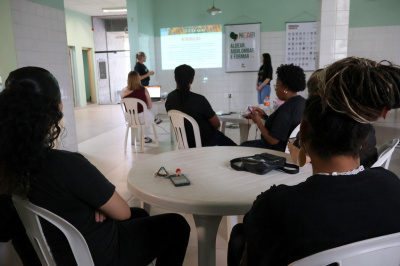
The Leadership School of Unesc held, on September 23, the first stage of sharing community intervention projects developed by the leaders participating in Class III. The e...

Publicado por: Décio Batista
em 6 de outubro de 2026
Tempo de leitura: 9 minutos.

 The Leadership School of Unesc held, on September 23, the first stage of socialization of community intervention projects developed by the leaders participating in Class III. The meeting marked an important moment in the training developed throughout the year and highlighted the leaders' ability to transform experiences, knowledge, and needs of their territories into concrete action proposals.
The program is part of Unesc's Extension actions, under the coordination and academic management of the Graduate Program in Law (PPGD), with funding from the Coordination for the Improvement of Higher Education Personnel (Capes), through the Extension Program for Higher Education in Graduate Studies (Proest-PG). The proposal brings postgraduate education closer to community and social leaders and their territories.
 According to the coordinator of the Leadership School Program, Reginaldo de Souza Vieira, the socialization of the proposals expresses the very conception of the Program. "The project recognizes that territories produce knowledge, experiences, and forms of organization that are fundamental for building collective responses. The presentation of the projects strengthens the dialogue between the university and society and reaffirms our commitment to critical, democratic education that is engaged with popular participation and the guarantee of rights," explained the coordinator.
During the training process, the class participated in four modules focused on strengthening leadership, deepening knowledge, and exchanging experiences necessary for community action. As a result of this process, participants, individually or in groups, developed intervention proposals related to the realities of their territories.
On the first night, five projects developed in different territories of Minas Gerais, Santa Catarina, Pernambuco, and Bahia were presented. The initiatives address the empowerment of rural women, agroecology, access to information and rights, security in quilombola communities, and the promotion of health, citizenship, and social participation of elderly people.
Preserving Flavor, Telling the Story
 Presented by Laura Lavorato, the project "Preserving Flavor, Telling the Story: memories, recipes, and resistance of rural women" will be developed with women farmers linked to the Association of Agroecological Rural Women and Men of Lavras (ACCAL) in Minas Gerais.
The proposal foresees the participatory construction of a fanzine with recipes, photographs, and testimonials from rural women. The initiative seeks to recognize women as guardians of traditional knowledge, value rural food culture, and contribute to the preservation of knowledge passed down through generations.
SPDH+: a new way of life
Presented by Marcelino Brusco on behalf of the group, the project "SPDH+: a new way of life" will be developed with farming families from the Rio dos Patos Settlement in the municipality of Lebon Régis, Santa Catarina.
 The proposal aims to support approximately 15 families in the implementation process of the Direct Planting System for Vegetables (SPDH) and other crops. The initiative articulates technical and academic knowledge with farmers' knowledge, seeking to improve soil health, reduce the use of chemical inputs, lower production costs, strengthen the autonomy of family farming, and contribute to agroecological transition.
Highlighting the participatory dimension of the initiative, Marcelino stated: "The study crops unite popular knowledge with academic knowledge, bringing a concrete reality to the construction of new knowledge."
Connect Community
 The project "Connect Community: information, rights, and participation" will be developed in the Historic Center of Araçuaí, Minas Gerais. Presented by Roberta Leite on behalf of Group 1, the proposal starts from listening to local residents and workers and aims to expand access to information, strengthen popular participation, value the history of the territory, and stimulate community involvement in identifying their problems and building possible solutions.
Safe Quilombo - Cupira/PE
 Developed by Rondiléia dos Santos, the project "Safe Quilombo" is being implemented in the Quilombola Community Sambaquim, located in Cupira, Pernambuco. The initiative proposes to expand access to information about security, social rights, and public services, as well as create communication strategies and approaches between the community and responsible agencies.
Explaining the origin of the proposal, Rondiléia emphasized: "The project was born from the needs presented by the quilombola community itself." The project's creator highlights that the initiative was not conceived externally, but built from listening to the territory and the demands expressed by its residents. The project demonstrates how dialogue with the community can give rise to actions aimed at protection, autonomy, and the guarantee of rights.
Circle of Healthy Dialogues
Presented by Ester Barros, the project "Circle of Healthy Dialogues: rights, health, and citizenship in the Judoflex Project" will be developed in the Valéria neighborhood of Salvador, Bahia, alongside the actions of the Association Arte Sem Fronteiras (ASF).
 The initiative is directed at elderly people served by ASF and foresees spaces for welcoming, listening, and dialogue on topics chosen by the participants themselves. The goal is to expand access to information and strengthen autonomy, coexistence, social participation, and the exercise of citizenship.
During her presentation, Ester summarized the essence of the proposal: “Caring also means informing, listening, dialoguing, and ensuring space for elderly individuals to exercise their citizenship with dignity, autonomy, and social participation.”
After each presentation, the invited researchers shared suggestions related to community participation, accessibility, ethical care, methods of recording and evaluation, defining outcomes, and the continuity of actions. The contributions were made in a formative manner, respecting the authorship of the leaders, the knowledge of the territories, and the concrete conditions for implementing each proposal.
Outcome
The meeting also revealed one of the main outcomes of the training: leaders not only identify the challenges in their communities but also mobilize people, build partnerships, and create responses rooted in local reality. Some actions are already underway, while others are beginning to engage with the community. Common to all is a demonstrated social commitment and potential to produce concrete results.
All experiences reaffirm the commitment of the Leadership School to recognizing and valuing the trajectories and knowledge built by leaders in their territories. The training aims to expand knowledge and strengthen the protagonism, autonomy, and intervention capacity of these individuals, who work daily in their communities, often with limited resources, through collective mobilization, building partnerships, and community solidarity networks.
Socialization
The first stage of socialization thus showed important formative results. The projects presented arise from daily life, from listening to communities, and from the knowledge accumulated by the leaders. “By promoting their engagement with researchers from the University, the Leadership School strengthens a relationship of exchange in which research, extension, and community knowledge dialogue in conditions of respect and mutual learning,” emphasizes Reginaldo.
The next stages will continue the presentation and refinement of the proposals. “The expectation is that researchers will also be able to accompany their execution and collaborate, in the future, with the recording and dissemination of experiences through co-authored publications with the leaders,” adds the program coordinator.
Protagonism
 According to the mediator of the meeting and postdoctoral researcher at PPGD, Ana Paula de Matos, the projects developed at the end of the training process highlight the protagonism, power, and commitment of the leaders to their territories. “Built from listening and community demands, these proposals have the potential to expand access to rights, strengthen social participation, and contribute to building socially relevant changes in the territories,” commented the mediator.
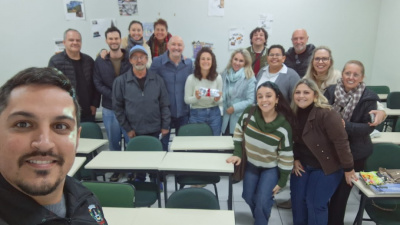
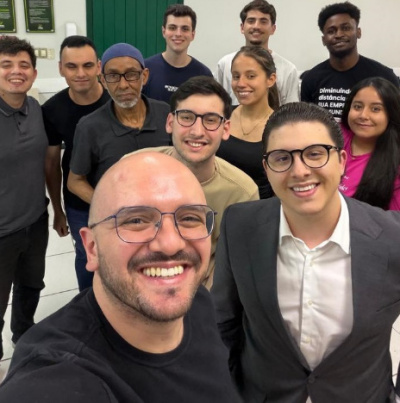
The socialization involved the participation of professors, researchers, and students from the graduate programs at Unesc, invited to share knowledge and experiences to contribute to the refinement and execution of the proposals. The meeting constituted a space for listening, dialogue, and collective construction, bringing scientific knowledge closer to popular, community-based, and traditional knowledge.
Participating as invited professors and researchers from the Graduate Program in Environmental Sciences (PPGCA) were: José Carlos Virtuoso, Eduardo Martinello, and Suliano Ferrasso; the master's students from PPGCA, Marcela Martins Tavares and Pâmela Ribeiro Jaques; the doctoral student from PPGDS, Roberto Ragagnin; and the master's and doctoral students from PPGD, respectively, Amanda Crescêncio and Michel Belmiro Ilíbio.
Collective Work
The initiative receives support from the graduate programs in Socioeconomic Development (PPGDS), Environmental Sciences (PPGCA), Health Sciences (PPGCS), Education (PPGE), Health Management (PPGGS), Public Health (PPGSC), Productive Systems (PPGSP), and Materials Science and Engineering (PPGCEM), all from Unesc.
The Law course, the Latin American Observatory of Human Rights Professor Antônio Carlos Wolkmer, and the Brazilian Network of Legal Research in Human Rights (REBRADH) also participate. The cooperation network includes the National Collective of People with Albinism (CNPA), the National Collegiate Forum of Guardianship Counselors, and the OAB Subsection of Criciúma.
Check out the full meeting here.
Tags: